Mastitis isn’t just one thing. It’s a whole range of breast conditions that can make feeding uncomfortable, frustrating or downright painful. It’s inflammation of the breast, and it’s rarely an infection needing antibiotics. It can usually be dealt with at home, with the right first aid and support.
This guide follows new research and is based on the latest Academy of Breastfeeding Medicine Clinical Protocol #36, but hopefully in an easy read! I’m using “breast” and “breastfeeding” here to match the ABM language, but please use the words that feel right for you: chest, chestfeeding, bodyfeeding, they’re all valid.
How your breast works
Inside your breast are tiny milk-making sacs called alveoli. They send milk through a branching network of milk ducts to the nipple. If those ducts become inflamed or narrowed, milk can’t move freely. This can lead to swelling, tenderness or other symptoms.
The mastitis spectrum
Engorgement: usually happens in the first days after birth, when colostrum (liquid gold, which is so important for baby) changes to mature milk, when your milk “comes in”. Your breasts may feel very full, heavy and tight, and possibly hot to touch, a bit like a basketball about to explode! Feeding baby often and responsively is usually the quickest way for your body to learn how much milk to make. Avoid extra pumping or milk collection cups if you don’t need to supplement baby. An ice pack (wrapped in a cloth) for 20 minutes every hour or so can reduce inflammation, but obviously get some rest if you can! You don’t need to get up for ice if you feel comfortable. Gentle lymphatic drainage massage can help move fluid. Lucy Webber IBCLC shows you how in this video:
- Blocked ducts (ductal narrowing): a milk duct becomes inflamed or narrowed, causing a small, firm lump and sometimes mild redness. There’s usually no fever.
- Inflammatory mastitis: if inflammation builds, it can cause redness, heat, swelling and pain, often with chills or fever. This isn’t always an infection. It may be inflammation only.
- Bacterial mastitis: an actual infection that may need antibiotics. Look for redness, swelling and flu-like symptoms that continue for more than 24 hours. You can usually keep feeding safely while being treated.
- Abscess: a pocket of infection (pus) that can develop if bacterial mastitis isn’t treated or doesn’t respond. This needs medical assessment and drainage.
- Galactocele: a milk-filled cyst from a blocked duct. Usually painless unless it becomes infected.
- Recurrent or subacute mastitis: mastitis that keeps coming back, often linked to oversupply, incomplete treatment, or changes in your breast’s natural bacteria (microbiome).
Engorgement and blebs are the ones we see most at our groups.
Milk bleb
A milk bleb (or milk blister) is a small white or yellow spot, usually on the tip of the nipple. It’s linked to inflammation and a narrowed duct, with milk getting stuck under the skin. It can be painful and may be linked with inflammation deeper in the breast.
Tips for caring for a milk bleb:
- Please don’t pop or pick them.
- Keep feeding or expressing as normal to keep milk moving.
- A little olive oil on cotton wool can help soften the skin. A short Epsom salt soak may help too.
- A short warm compress just before a feed can feel soothing, but keep it brief, as longer heat can make inflammation and swelling worse.
- Some people find sunflower or soya lecithin helpful, especially if they have recurrent blocked ducts. Typical doses used in breastfeeding are around 3.6–10 g a day, but evidence is limited and it isn’t suitable for everyone. Speak to your GP or pharmacist before starting any supplement. An IBCLC or breastfeeding counsellor can help you look at the underlying causes of recurrent inflammation.
- Sometimes a doctor may prescribe a short course of 1% hydrocortisone cream for inflamed nipple skin (for example, eczema). This should only be used under medical guidance.
- If it gets worse, becomes very painful or doesn’t heal, get it checked.
Caring for mastitis at home
Think of it like a sprained ankle. When there’s inflammation anywhere else in the body, we use ice, not heat, and the breast is no different.
And just like you wouldn’t go for a run on a sprained ankle, over-pumping to try to “clear” it can make things worse. Rest matters too. I truly know how impossible that can feel with a new baby, but resting is important for your body to heal.
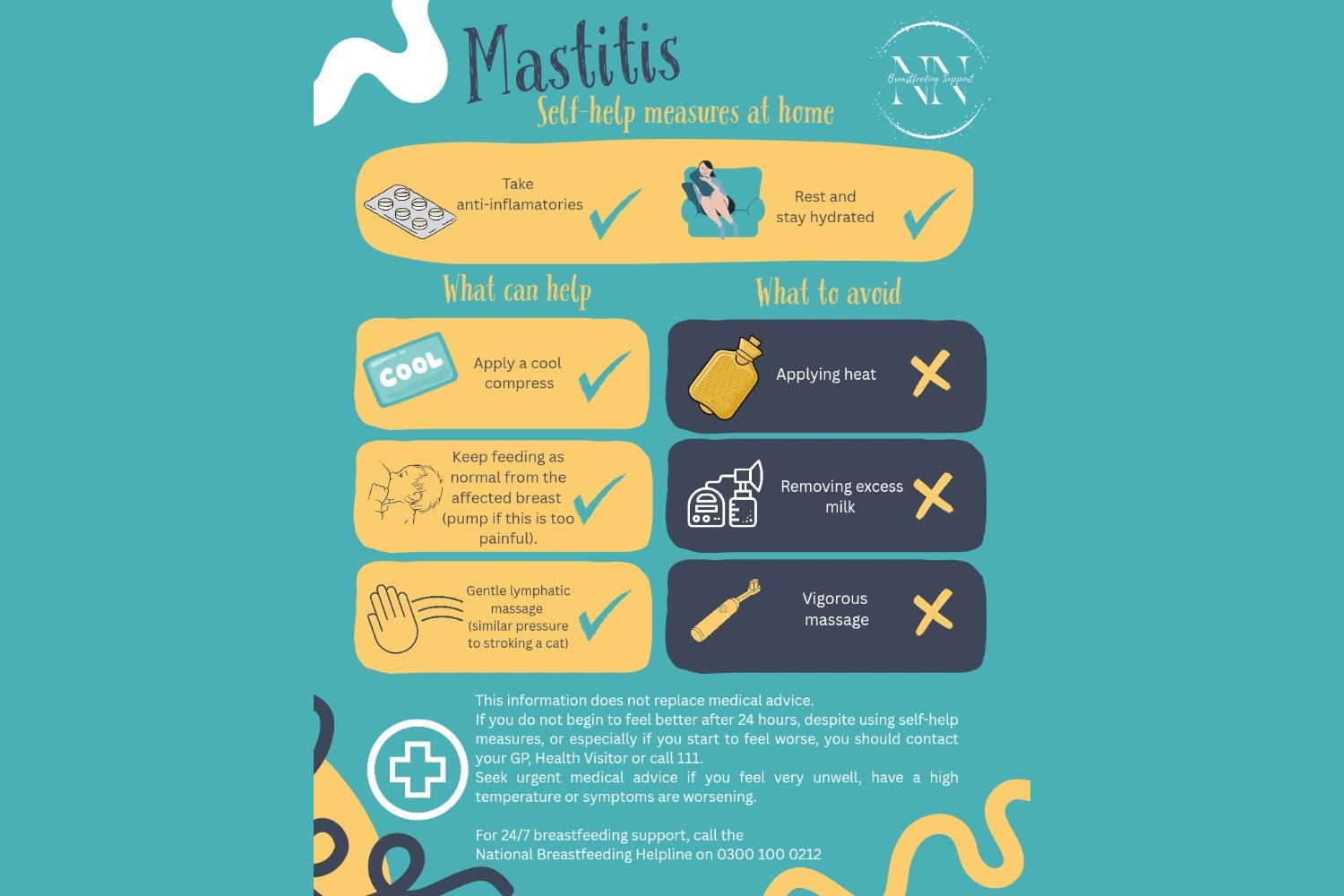
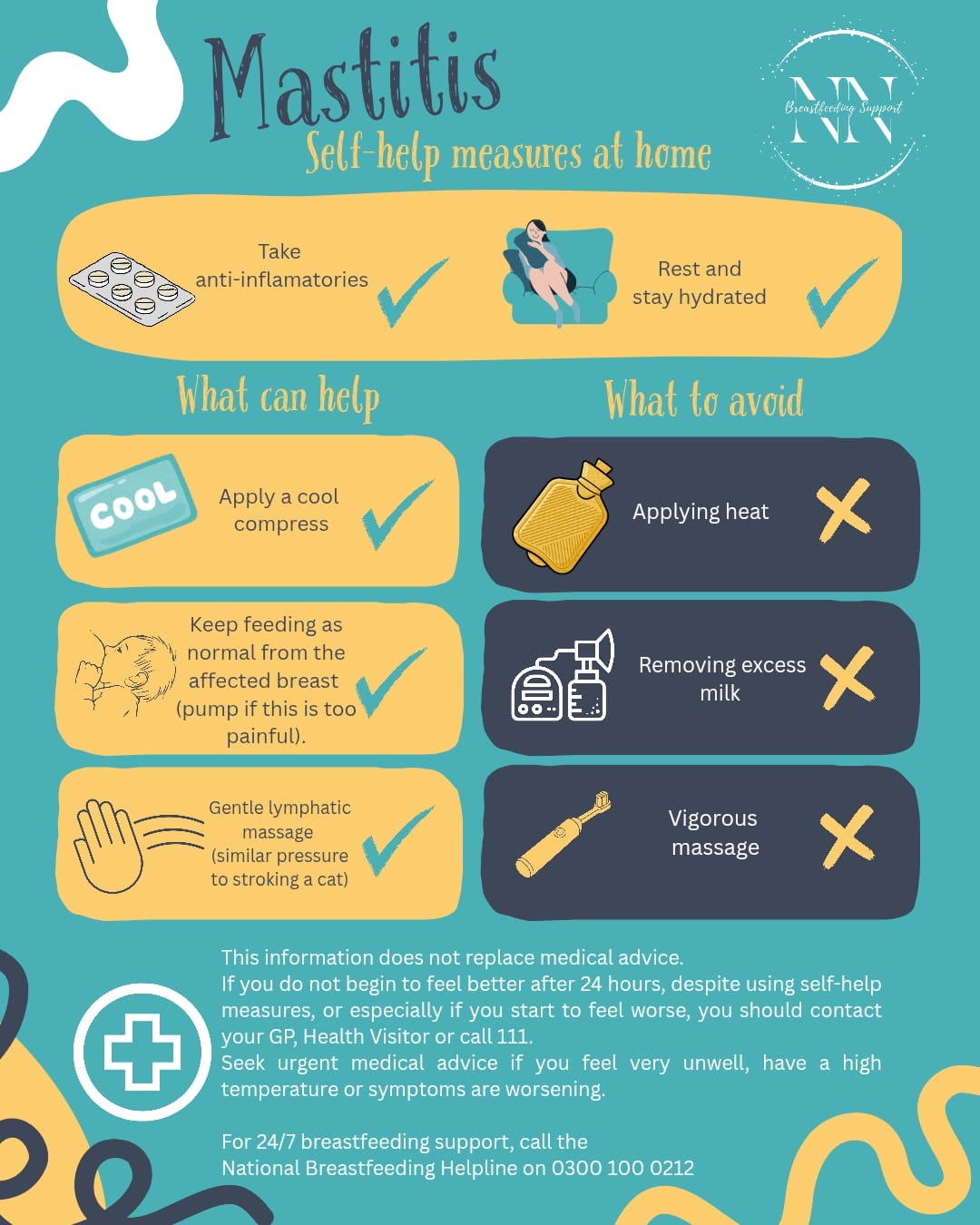
Think first aid: Rest, Ice, Ibuprofen, and gentle lymphatic drainage massage. Most cases improve with gentle, consistent care:
- Feed as normal, on demand. Don’t try to “empty” the breast completely.
- If you feel very full, hand express just enough for comfort.
- Avoid nipple shields unless a skilled breastfeeding supporter or health professional suggests and supports their use.
- Wear a comfortable, supportive bra that isn’t too tight.
- Skip hard, deep breast massage. Gentle skin stroking and light compression are safer and less likely to worsen inflammation.
- For pain or swelling, ibuprofen and paracetamol are usually considered breastfeeding-safe when taken as directed.
- Try cold compresses after feeds for relief.
- Rest as much as you can and stay hydrated.
- If you have oversupply, get support from an IBCLC or experienced breastfeeding specialist.
What to avoid:
- massaging with an electric toothbrush
- stopping breastfeeding
- over-pumping or over-feeding to “clear” it
- warm compresses and long, hot baths or showers
When to get help
See your GP or another healthcare provider promptly if:
- you’ve had flu-like symptoms (such as fever, chills or aching) for more than 24 hours
- pain, redness or swelling is getting worse instead of better
- you have a lump that doesn’t improve over a couple of days, even with good feeding and self-care
- you suspect an abscess (a hot, very painful lump, sometimes with feeling very unwell)
- mastitis keeps coming back or never fully settles
If you have flu-like symptoms or a fever out of hours, call NHS 111. In the middle of the night and not sure what to do? Call the National Breastfeeding Helpline on 0300 100 0212.
Antibiotics and probiotics
- Antibiotics are only needed for bacterial infections. They won’t help simple inflammation on their own.
- Overusing antibiotics can upset your breast’s natural microbiome and contribute to antibiotic resistance.
- Certain probiotics may help prevent mastitis or support recovery in some people. An IBCLC, pharmacist or healthcare professional can guide you on which products and strains may be appropriate.
Taking care of you
Mastitis can leave you sore, tired and low. You might feel fed up, worried about your milk supply, or anxious about feeding. All of these feelings are completely understandable. Mastitis is rubbish, but it will pass.
You are not alone. Support is available from:
- Breastfeeding counsellors, Lactation Consultants (IBCLC), other lactation specialists and trained Peer Supporters
- the National Breastfeeding Helpline open 24/7 https://www.nationalbreastfeedinghelpline.org.uk/(0300 100 0212) and our free drop-in groups
- GPs and practice nurses
- Midwives
- Health visitors
The main thing to remember
Mastitis is usually easily treated at home, though it can be really painful. Treat it like first aid: feed as normal and change as little as possible. Don’t pump extra or feed extra to “remove” milk. This just teaches your body to make more milk, can make things worse, and it’s exhausting!
Mastitis can range from mild swelling and inflammation to a very serious infection, but with early first aid and the right support, it usually clears within a few days. You may have a bruised feeling that lingers for a few days after. Your breast has been through a lot!
Be gentle with your breasts, and reach out for help if things don’t improve or you’re worried. If you develop a fever, chills or flu-like symptoms, call your GP or NHS 111.
This information is based on the Academy of Breastfeeding Medicine Clinical Protocol #36 (The Mastitis Spectrum) and other current, evidence-based breastfeeding guidance.
Marion Frey-AlQurashi, Breastfeeding Counsellor, Certified Lactation & Breastfeeding Specialist and Mindful Breastfeeding Practitioner
Found this helpful?
We’d love to hear from you, so leave us a comment below. Our drop-in groups are free, and we rely on donations to keep them running. If you’re able to, you can buy us a coffee on Ko-fi. Every little bit helps us support more families in Norwich and Norfolk. Thank you! 💛

Leave a Reply