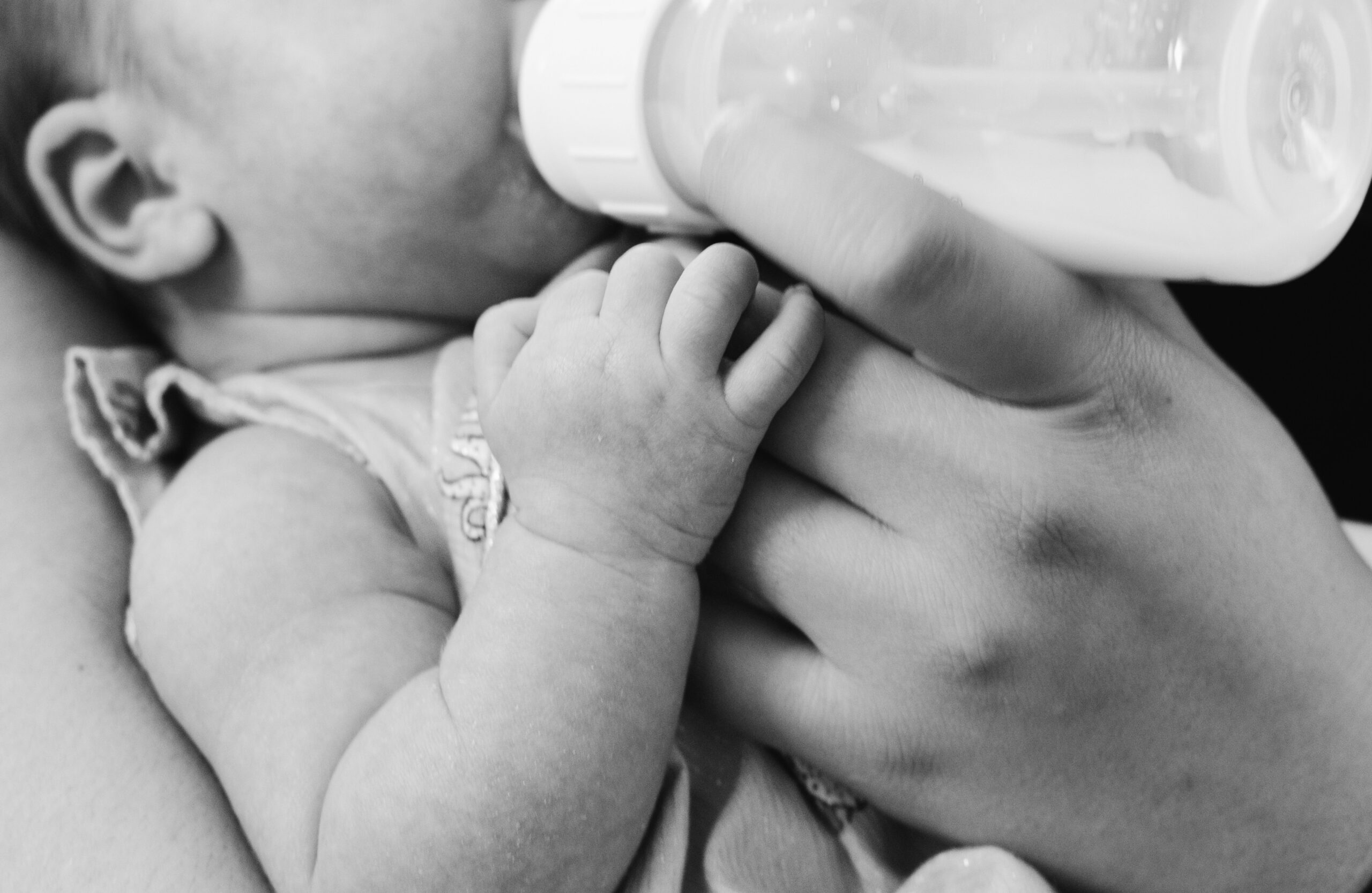
You might be thinking about introducing a bottle or two, or you might have been told your baby needs one. It can be hard to know where to start with bottles, and how to protect breastfeeding and your supply.
When parents come to us about combi feeding, we usually start by asking how they’re feeling about it, and whether it’s something they’ve chosen or something they need to do.
It also helps to know if you’re thinking of one or two bottles a day, or more like half and half, and how old your baby is. The older your baby is, the less likely a bottle is to affect your supply. This helps us make a plan that works for your family.
There are lots of reasons why families combi feed, and all of them are valid.
Top-up traps, and a lack of support with topping up or stopping top-ups. Have a look at our blog on moving away from top-ups.
Wanting the other parent or partner to bond with baby. But partners go back to work eventually, and mums can end up doing the bottles and the breastfeeding, but there are so many other ways to bond that are so, so valuable to baby, building those brain connections: playing, changing baby, reading stories (which we know is so beneficial), taking baby for a walk and bath time are all great bonding activities and learning opportunities for baby. Doing housework is important too, so the whole family shares the domestic load.
Wanting to sleep, or wanting baby to sleep longer. We know formula doesn’t always help, and it’s natural for babies to wake at night. Our newborn sleep blog explains why.
If you’re thinking about bottles because breastfeeding is hard, it may not be worth it. Making formula safely is hard work, and when breastfeeding works, it can be much easier to just pop baby on the boob. Come and see us first, and get support.
When to introduce a bottle
If you have the choice, it can help to wait until breastfeeding is going well: baby has a comfortable latch, is doing well nappy-wise and weight-wise on breastfeeding alone, and you feel your supply has settled.
Going back to work? If baby is over 6 months and eating solids, and you’re working part time, they may not need bottles at all, or not as many as you think. Some babies “reverse cycle” and feed a bit more at night to catch up, and they want and need mum anyway. Get in touch and we can work out what could work for you, depending on your baby’s age.
Protecting your milk supply
Your milk works a bit like a supermarket shelf: it only gets refilled once it has been used. When your breast is full, a protein in your milk called FIL (feedback inhibitor of lactation) tells your body to slow down. When milk is removed, by baby or by a pump, the signal goes and your body makes more.
So every time a bottle replaces a breastfeed, your breasts get one less signal to make milk.
If breastfeeding isn’t established yet, you may need to protect your supply by expressing when baby has a bottle. You might find our expressing blog useful.
Listen to your body. If you feel engorged, an ice pack, ibuprofen (if it’s safe for you) and lymphatic drainage can help. You may need to feed baby, or pump just a little bit, to feel comfortable and avoid mastitis. Have a look at our mastitis blog.
Go slowly. Swap one breastfeed at a time. It may take a few days for your breasts and your supply to adjust when you drop a breastfeed.
Slow down, and get support, if:
- baby is really unhappy
- nappy output has dropped
- baby shows signs of dehydration (please call 111, or 999 if needed)
- baby is refusing either the breast or the bottle
Night feeds are important for your long-term supply in the early weeks. It is also normal, and needed, for babies to wake many times during the night.
If your baby is under six months, any breastfeed you drop needs to be replaced with expressed breast milk or first infant formula, given by bottle, cup or another method.
Breast milk or formula?
That’s a tricky one. We know breast milk is best. It’s tailor-made for your baby, and it helps protect your health and your baby’s long-term health. But pumping is so hard. If you’re waking up at 3am to pump for 20 minutes so your partner can give a bottle at 4am… is it even worth it?
Any amount of breast milk is valuable. Formula is a valid choice if it works for you and your family, as long as it’s your choice and an informed one.
Babies only ever need first infant formula. Nothing else. You don’t need “comfort”, “hungry baby” or “good night” milks. All formula in the UK is made to high standards, so the cheapest supermarket one will do. First Steps Nutrition Trust has fair, clear facts on formula, with no adverts.
Making up formula safely really matters. Powdered formula isn’t sterile. The water needs to be at least 70°C to kill bacteria and germs that may be in the powder and could harm baby. The NHS says to leave boiled water in the kettle for no more than 30 minutes, and to make up one feed at a time. Have a look at the NHS guide to making up a feed.
From about one year, you can start weaning off bottles and just keep breastfeeding. Breastfeeding still has value for toddlers and older children. After 12 months, babies don’t need formula any more, but breastfeeding still has valuable nutrition way past toddlerhood, and the WHO recommends breastfeeding until baby is at least 2 years old, and for as long as desired.
How much milk?
It’s so hard to find good information on this!
Breastfed babies often take less from a bottle than the tin says. From around two weeks, a parent with a full supply usually makes about 700 to 900 ml a day, and that doesn’t go up much between one and six months. Breast milk is tailor-made for growing babies.
So if you roughly know how many feeds your baby has over 24 hours, you can work out what baby needs in a bottle.
Between one and six months, most babies take somewhere between 570 and 900 ml of milk a day, around 750 ml on average. This doesn’t change much over those months, even though baby is growing, as your milk adapts to baby’s needs.
To get a rough idea of how much to put in a bottle, count how many times baby feeds in 24 hours, breast and bottle together. Then divide 750 ml by that number. So if baby feeds 8 times a day, that’s 750 ÷ 8 = about 90 ml per feed. That’s a good place to start, and baby will show you if they want a bit more or a bit less.
These are only a guide. Every baby is different, and it’s your baby’s nappies, weight and mood that tell you if they’re getting enough.
Let your baby show you when they’re full, and throw away any leftover formula.
Too much milk from a bottle can make babies uncomfortable. Big bottles can also mean fewer breastfeeds, and that can lower your supply.
Giving a bottle
A bottle works differently from the breast. The milk flows faster and baby doesn’t have to work for it, while at the breast they have more control. Paced (or responsive) bottle feeding makes a bottle feed more like a breastfeed.
This video shows paced feeding:
- Hold baby close and fairly upright, looking into their eyes. Not lying flat.
- Tickle baby’s chin with the teat and wait for a wide open mouth. Let baby take the teat in, rather than pushing it in.
- Keep the bottle more horizontal to the floor, just tilted enough to keep milk in the teat. That way baby controls the flow, a bit like waiting for a let-down.
- Follow baby’s lead if they need to pause.
- Watch for signs the flow is too fast: gulping, wide eyes, splayed fingers, milk spilling out, or not pausing to breathe. If you see these, slow things down.
- Never push baby to finish the bottle. Stop when they show you they’re full.
Babies want to suckle. It’s a natural instinct that keeps them alive. So just because baby drains the bottle doesn’t mean they were hungry. You can offer the breast for comfort and to finish the feed.
Paced feeding can help babies go happily between breast and bottle, and later from bottle to cup. It also helps them learn when they’ve had enough. Our cups blog has a paced feeding video.
Teats: a short or medium teat with a rounded tip, and a slow flow, is usually closest to the breast. But labels aren’t always reliable, and “most like the breast” on the packet doesn’t mean much. You might need to try a few before you find one your baby gets on with.
Who gives the bottles: UNICEF suggests keeping it mainly to parents and one or two close people, especially in the early weeks. This helps baby feel safe, and feeding stays a time for closeness. If your baby goes to nursery, a childminder or grandparents, ask them to pace feed too.
Offer the breast for comfort, not just for food, and do lots of skin to skin.
If your baby is having top-ups, you can try finishing the feed at the breast (breast, top-up, then breast again), so baby links the breast with feeling full and settled.
If baby is getting frustrated at the breast, breast compressions and switch nursing can help with the flow. But please seek support.
If baby starts refusing the breast, cut back on bottles for a few days and get some support. This often settles with time and a bit of help. Our blog on when baby is not latching may help too. Please do seek support if anything doesn’t feel right.
You can also give extra milk by cup, spoon, syringe or finger, or with a supplementer at the breast. Cups can be used from day one, with your milk, donor milk or formula. There’s no teat, so baby keeps their breastfeeding suck. Our blog on feeding without bottles shows you how. The NHS advises weaning off bottles around 12 months, to protect baby’s oral health. An open cup can work well, but it can be a difficult transition, so speak to us.
Combi feeding can be a long-term plan, or a stepping stone. If your baby needs bottles early, for example for weight or blood sugar, and it was not your choice, see the bottle as a little tool, like a medicine or a stepping stone, that helps them get better at breastfeeding. They just need a little help. It doesn’t have to be the end of breastfeeding. If you’d like to reduce top-ups and do more breastfeeding, have a look at our blog on moving away from top-ups and reducing pumping.
And if you’d like to keep a bottle or two, that’s fine too. What works for one family may not work for another.
Useful reading
- First Steps Nutrition Trust: independent information on formula
- UNICEF Baby Friendly: Infant formula and responsive bottle feeding guide
You don’t have to work this out alone
Every family’s combi feeding looks different. Come to one of our free drop-in groups, or get one-to-one support, and we can make a plan together that works for you and your baby.
Marion Frey-AlQurashi, Breastfeeding Counsellor, Certified Lactation & Breastfeeding Specialist and Mindful Breastfeeding Practitioner
National Breastfeeding Helpline: 0300 100 0212, open 24/7.
Found this helpful?
We’d love to hear from you, so leave us a comment below. Our drop-in groups are free, and we rely on donations to keep them running. If you’re able to, you can buy us a coffee on Ko-fi. Every little bit helps us support more families in Norwich and Norfolk. Thank you! 💛
Photo by Kelly Sikkema on Unsplash
Leave a Reply